When Anthony Albanese arrived at the United Nations general assembly in September last year, he was desperate for face time with Donald Trump.
The prime minister had been due to hold his first meeting with the US president on the sidelines of the G7 summit in Canada that June, but Trump cancelled at the last minute. By September, he was under pressure to lock in Trump’s support for the Aukus nuclear submarine agreement and show Australia remained a top tier ally.
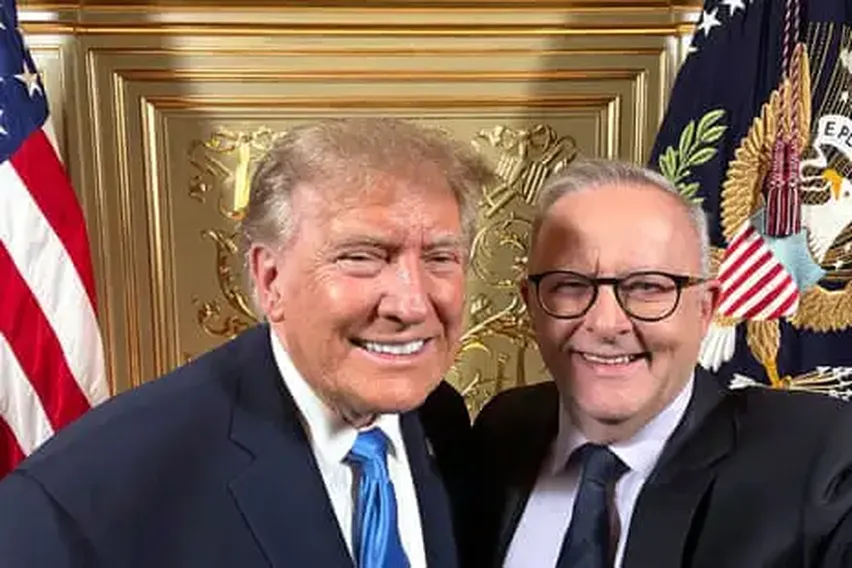
So, in the briefest of meetings at a cocktail party, Albanese made sure to take his shot. Rather than waiting for the release of an official photo, he posted a selfie with Trump and his shock of white teeth and announced he’d visit the White House the following month.
A year later, and as Albanese works to grow his stature on the world stage, he did the same thing. This week’s selfie shows the two leaders smiling awkwardly in front of gold panelling, with Albanese slightly in the shadow of Trump’s famous quiff.
The response on social media was scathing, with responses criticising Albanese for kowtowing to Trump.
Many Australians clearly don’t like the US president.
At the last election, Albanese campaigned successfully on his opponent, Peter Dutton, being too close to Trump, while in July, a US Studies Centre poll found nearly a third of Australians believed the second Trump administration had been very bad for Australia. Only 16% of respondents said Trump’s return to the White House was a good outcome for this country.
His war of choice in Iran and ricocheting economic pain from the closure of the strait of Hormuz has hurt his standing. His support for Israel over the war in Gaza and his complete disregard for key American allies meant Trump wasn’t particularly loved in Australia to begin with.
So why is Albanese still posting smiling selfies with the president?
The prime minister has long viewed close ties with the US government as a key pillar of Australian foreign policy. Despite the delay in meeting, the pair seem to have quickly developed a strong relationship, something Albanese views as useful, including on thorny issues like Australia’s push to rein in American social media platforms and regulation of AI.
Albanese also likes selfies generally. He regularly posts shots with other world leaders and often poses with members of the public wanting a photo with him. Selfies also give him the chance to control the message, and cut out the filter traditionally applied by the media.
Politicians’ photos are always carefully curated. While a professional photographer can capture a set piece moment such as an agreement being signed or an official handshake, a selfie is the opposite. It is more intimate and visually represents friendship.
Australian prime ministers always want to be close to US presidents and despite Trump’s peculiarities, Albanese is no different.
When Lyndon Johnson visited Australia in 1966, a photo of him speaking at Canberra airport appeared to illustrate criticism of then prime minister, Harold Holt. Holt is shown looking at the ground, behind Johnson at the lectern, as if in deference. Holt declared Australia’s willingness to go “all the way with LBJ” at the height of the Vietnam War.
But navigating Trump’s unpopularity will likely become an increasing political challenge for Albanese over the rest of the president’s term.
It remains to be seen if he will keep posting selfies with a leader many Australians revile.