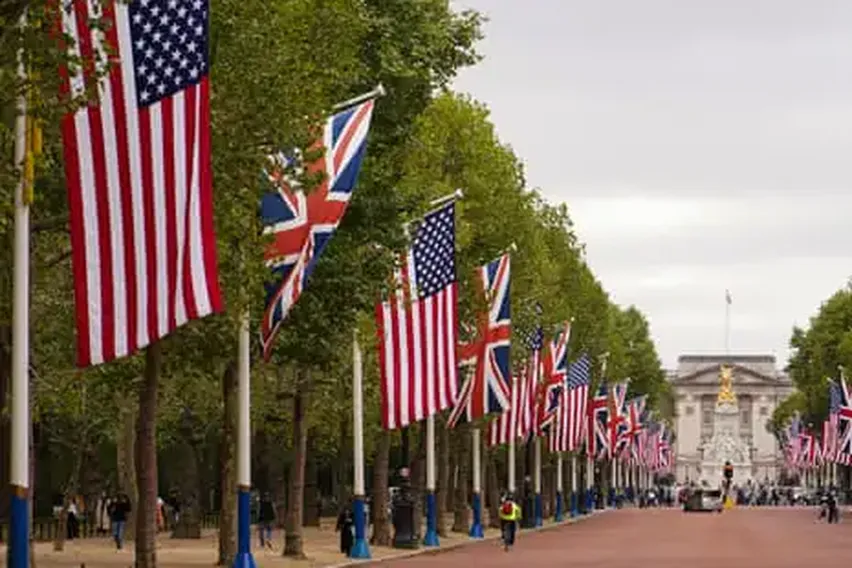
The UK hosts the second largest population of voting-age US citizens outside the United States, but Americans living in the UK vote at very low levels in US elections.
The US government’s Federal Voting Assistance Program (FVAP) estimated that there were 298,268 voting-age US citizens in the UK in 2022, second only to Canada. But FVAP also estimated that only 3.8% of these US citizens in Britain voted in that year’s midterm elections. Why do hundreds of thousands of eligible US voters in the UK not exercise their right to vote, even though US rules for voting abroad are relatively welcoming compared to many other countries?
The UK has recently conducted its own experiment in overseas enfranchisement. In January 2024, Britain abolished the 15-year limit on overseas voting, potentially enfranchising about 2.3 million additional British and eligible Irish citizens living abroad. The UK expanded overseas voting rights deliberately embracing “votes for life”, a policy long practiced in the US to allow all overseas voter-age Americans to vote, regardless of how long they have lived out of the country.
The UK government expanded overseas voting rights, while the Trump administration has sought to restrict mail-in voting, including for overseas Americans. But last week, the US supreme court rejected the Trump administration’s efforts to limit mail-in voting before the midterm elections.
US citizens in the UK can take this opportunity to vote when they can still make their voices heard.
For Americans living abroad, voting in federal elections is easier than many think. The rights of overseas voters are protected by US federal law under the Uniformed and Overseas Citizens Absentee Voting Act. This law requires states to allow eligible overseas citizens to register and vote absentee and to transmit ballots in a timely manner. Voters abroad can use the Federal Post Card Application (FPCA), which combines voter registration and a request for an absentee ballot. The process is manageable, but it can take time, so overseas voters should start now.
The US Vote Foundation and the Overseas Vote websites provide clear, non-partisan guidance on how to register and vote from abroad. Try the US Vote Foundation’s user-friendly interactive tools, such as the “Journey Map for How to Vote in America”, to help plan and track your process.
Some myths and misunderstandings about the connection between voting abroad and paying taxes may be fueling the low turnout by US overseas voters in the UK. But voting from abroad for federal candidates does not expose US overseas voters to federal tax obligations. That is, voting for president, vice-president, and US Congress has no influence on your tax profile or status.
Voting below the federal level, in state or local/municipal elections, could incur state tax liability in some states. The most important elections in the upcoming midterms are the federal elections for the House of Representatives and the Senate, so voters abroad can still have an important impact without any danger of affecting their taxes by voting only at the federal level, and leaving the rest of the ballot blank.
US citizenship itself – not voting – is what creates the tax relationship. A US citizen living permanently in the UK is generally subject to US tax rules on worldwide income and may have to file a US federal tax return, regardless of whether that person has voted in a US election in decades – or has never voted at all.
So, basically, to go back to an old trope in US-British relations, if they don’t vote, US citizens living in the UK can have “taxation without representation”. Voting from abroad for federal offices does not lead to more taxation, but it does permit some representation. Americans abroad remain subject to US fiscal obligations while extraordinarily few exercise the political right that gives them some say over the government imposing those obligations.
Some eligible voters may be discouraged by recent efforts in Washington to restrict access to voting. But Donald Trump’s Save America Act, which includes proof-of-citizenship and voter-identification requirements, did not pass the Senate before it recessed in August. An attempt to pass narrower voter-ID legislation also failed.
Given the size of the eligible population and persistently low participation, Americans abroad represent a largely untapped electorate. The UK is particularly important: it has hundreds of thousands of US citizens, close cultural and economic ties to the United States, and extensive access to British and American political news.
Research on voter participation has found that personal contact can increase turnout. In practice, that suggests informal networks – friends, colleagues and community groups – can play a meaningful role in encouraging Americans abroad to vote. People in the UK can remind their US friends and neighbors that US elections have far-reaching consequences for the world.
-
Kathryn Sikkink is the Ryan Family professor of human rights policy at the Harvard Kennedy School