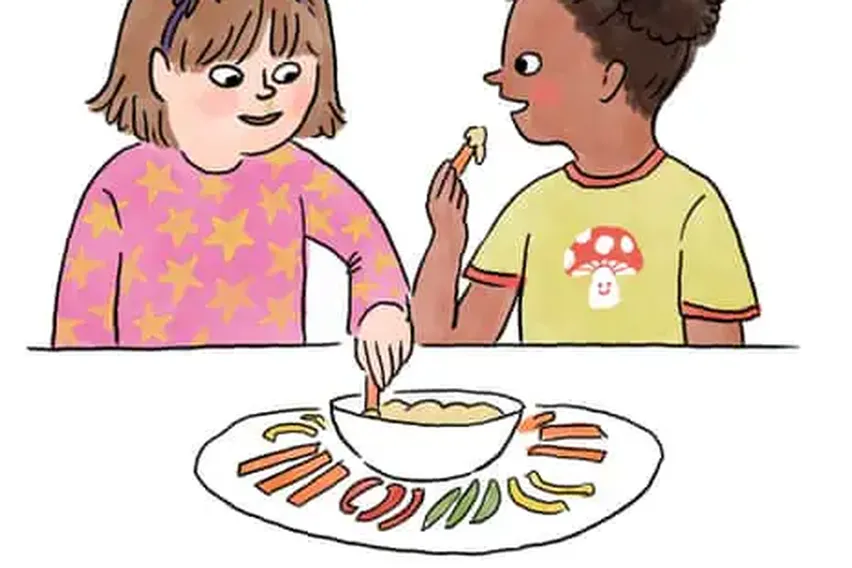
Double-dipping means eating part of a piece of food and then putting it back into a communal dip – for example, biting a carrot and dipping it into shared hummus, or redipping a half-eaten tortilla chip in salsa. The concern is that bacteria from your mouth get transferred into the dip and could cause illness in the people you’re sharing it with.
“You do transmit bacteria from the food you have eaten back into the source,” says Prof John Tregoning, the author of Live Forever? A Curious Scientist’s Guide to Wellness, Ageing and Death. He points to a study testing salsa, chocolate sauce and cheese dip, which found bacteria were transferred to all three, with salsa showing the most contamination.
double quotation markMouth bacteria probably aren’t going to make you sick, but faecal bacteria probably could
But does that make people sick? “I doubt it, because the other person is going to have their own bacteria,” he says. Most people’s mouth bacteria are relatively stable and can fight off bacteria introduced from someone else. The risk may be higher for someone who is severely immunocompromised or who has recently taken antibiotics, but such infections are likely to be rare.
He says we should be more worried about bacteria transferred via hands. Studies of shared foods such as popcorn have shown a small amount of cross-contamination from fingers to food to mouths.
“Mouth bacteria probably aren’t going to make you sick, but faecal bacteria probably could. Salmonella, norovirus – the things that give you diarrhoea and vomiting – they can transmit particularly between foods, and particularly when people don’t wash their hands when preparing foods.”
So, while double-dipping does transfer bacteria, it’s probably less of a health risk than poor hand hygiene. “Bacteria are everywhere,” he says. “It’s not like your mouth is more full of bacteria than other bits of your body.”